
The x. Files: Reflections on Entrepreneurship
By Patty Tawadros, Founder, Studio x.
My journey into entrepreneurship started with my dad.
In 1995, I had my first job at Southco. The IT contractor who serviced our department’s Macs mentioned that one of his clients was looking for freelancers and asked if I was interested. I told him I’d think about it, then called my dad.
He didn’t hesitate. He said, “Say yes and figure it out later.”
That advice stuck with me, and it’s shaped how I approach pretty much everything since.
Over time, I’ve come to think there are two types of entrepreneurs.
Both have the ability to look at risk, understand it, and move forward anyway. They’re willing to push past the unknown to build something on their own terms. But how they do it is different.
Type 1 entrepreneurs build within an established model. Think of agencies, service providers, and professional practices. There’s a clear market, people understand what they’re buying, and there’s a defined path to revenue. It’s not easy, but it’s structured.
Type 2 entrepreneurs are driven by innovation. They’re building things that don’t yet have a clear market. The path is less obvious, the risks are higher, and it usually takes longer to see results. But the upside can be much bigger.
I started as a Type 1 entrepreneur.
In 2001, I was laid off during the dot-com bust. Because I had already picked up freelance clients years earlier, I had enough work to stay afloat. That quickly turned into a steady stream of projects.
Not long after, some former coworkers asked if I wanted to start something together. That led to Xercel, Inc., which eventually became Studio X, and kicked off what’s now been more than 20 years of running my own business.
But somewhere along the way, I realized I’m actually more motivated by Type 2 ideas.
Over the years, I’ve built a range of things that didn’t come with a clear playbook. Smart Sammy, a platform that rewarded users for completing chores. IntegriDate, an independent review platform for online dating. Brambaly, an automated website development system. Smoochie Paper, a luxury stationery brand that ended up getting global recognition before the pandemic disrupted the wedding industry. Grit/Clay, which started as a way to reset mentally and turned into a creative outlet. And now Donor X, which is focused on rethinking how human biospecimens are sourced.
These kinds of ideas require a different mindset. You’re figuring things out in real time, testing assumptions, and building without knowing exactly how it will play out.
Type 1 feels more predictable. You understand the customer, the service, and how to deliver it. There’s risk, but it’s manageable.
Type 2 feels a lot less controlled. You’re stepping into something new, where the rules aren’t fully defined yet. It can take longer to gain traction, and there’s no guarantee it will work. But when it does, the impact is much bigger.
Even large companies operate this way.
Amazon constantly launches new ideas, and most of them don’t succeed. That’s part of how they innovate.
Tesla ran into major issues when scaling production of the Model 3 because they overcommitted to automation. At one point, they had to finish parts of the assembly process manually in a parking lot just to keep things moving. And we all know how that story is going.
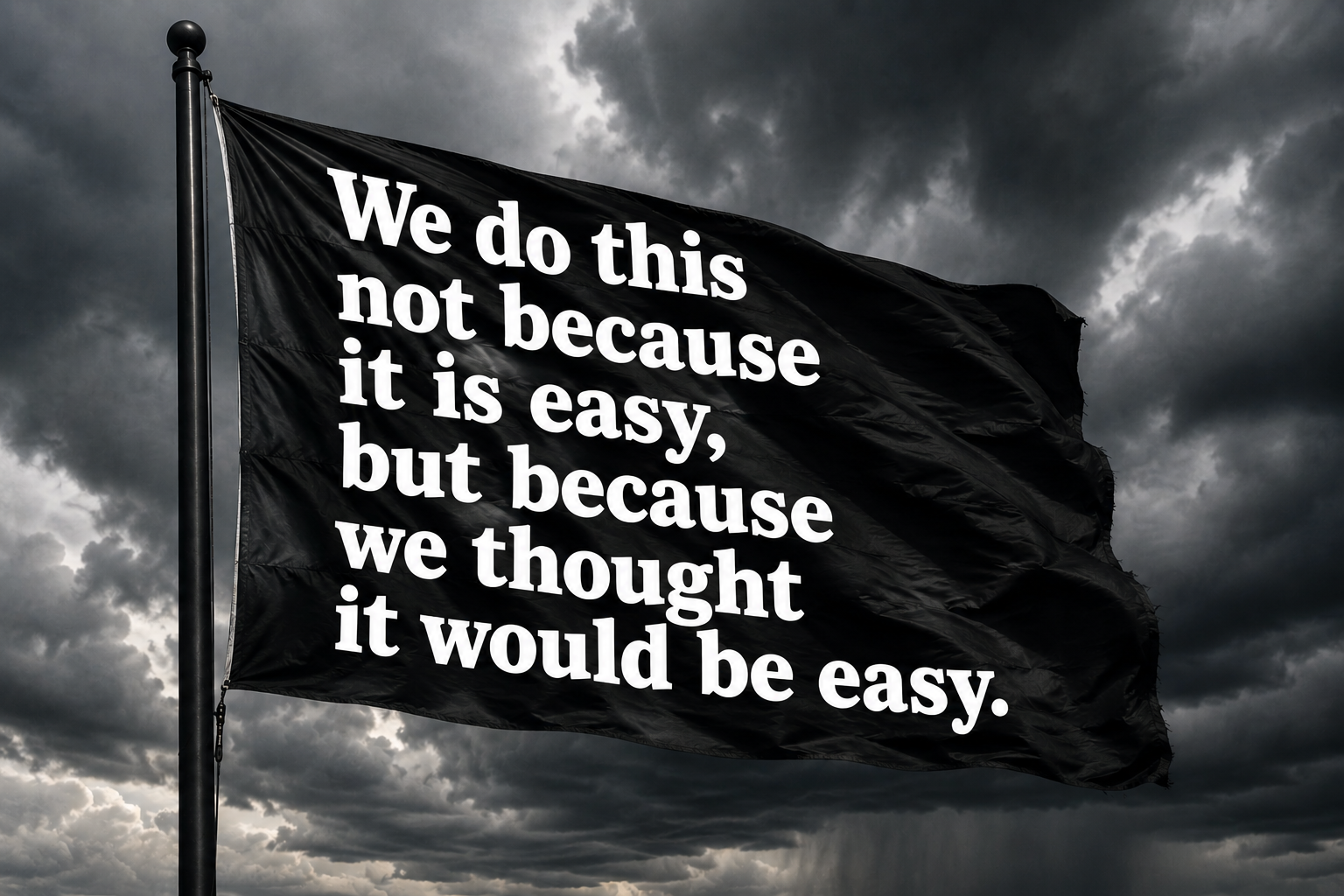
That’s what building something new actually looks like. It’s messy, it’s uncertain, and it doesn’t always go according to plan.
But that’s also where the interesting stuff happens.
And if there’s one thing I keep coming back to after all these years, it’s that my dad was right.
Saying yes and figuring it out later isn’t just how you get started. It’s how you keep going.